Problem Statement
Mental health is vital to every individual, yet many struggle to seek help due to stigma, lack of awareness, or difficulty finding the right therapist. People often feel isolated and hesitant to open up, which negatively impacts their well-being.
Background Story
The idea for Breath emerged from my personal journey with mental health struggles over the years. Like many, I faced challenges that were hard to voice, navigating through self-doubt, loneliness, and the fear of judgment. These experiences taught me the importance of having a safe space to share and heal. Inspired by my own battles and the support I received, I felt driven to create something that could help others facing similar struggles.
Initially, the name "Nirvana" resonated with me, influenced by Kurt Cobain and the concept of Nirvana is in Buddhism, the state of peace and happiness achieved after giving up personal desires. I chose "Breath" to represent the deep connection between life and consciousness, drawing inspiration from the Sanskrit word "प्राणा" which signifies vital energy or life force. This app represents more than a tool it’s a bridge to understanding, self-care, and emotional well-being, dedicated to everyone striving for mental clarity, including my mother, whose strength has been my guiding light.
Initial Research
In India, 7.5% of people face mental health disorders, with 30M not seeking help due to stigma. India alone represents 15% of global mental health, neurological & SAD cases.

Overcoming Stigma: A Safe Space for Support
For those feeling alone, unsure where to turn, or held back by social stigma, this highlights the need for accessible counseling and therapy, fostering hope and understanding.

Research Insights
After evaluating 20+ candidates, I gained deeper insights into the quiet struggles of living with anxiety and mild depression.
As someone who just started my career, I'm interested in taking care of my mental health, but these apps need to work around my schedule and budget. I can't commit to expensive subscriptions right now.
I've tried therapy before, so I'm quite cautious about mental health apps. I need to know there are real, qualified professionals behind the service - not just some AI giving generic advice.
The problem with most mental health apps is they're just too complex. I open them when I'm already feeling overwhelmed, and if the app itself is complicated, I just end up closing it.
Secondary Research Insights
Users report that free versions of Level and Calm apps do not provide sufficient trial durations, making the decision to upgrade challenging.
Excessive advertisements, sponsored content, and influencer promotions negatively impact the credibility and usability of mental health apps.
Competitive Analysis
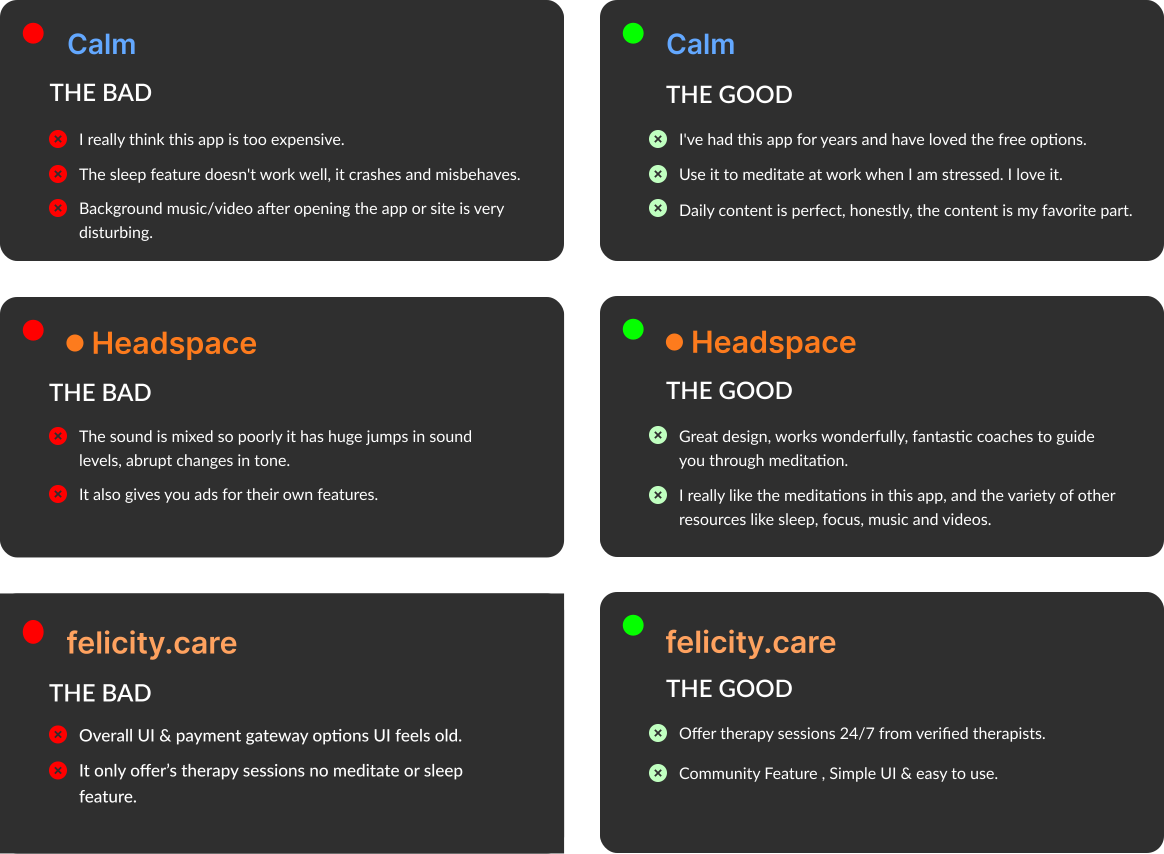
For those feeling alone, uncertain, or silenced by stigma, accessible therapy and counseling provide a path to hope and healing.

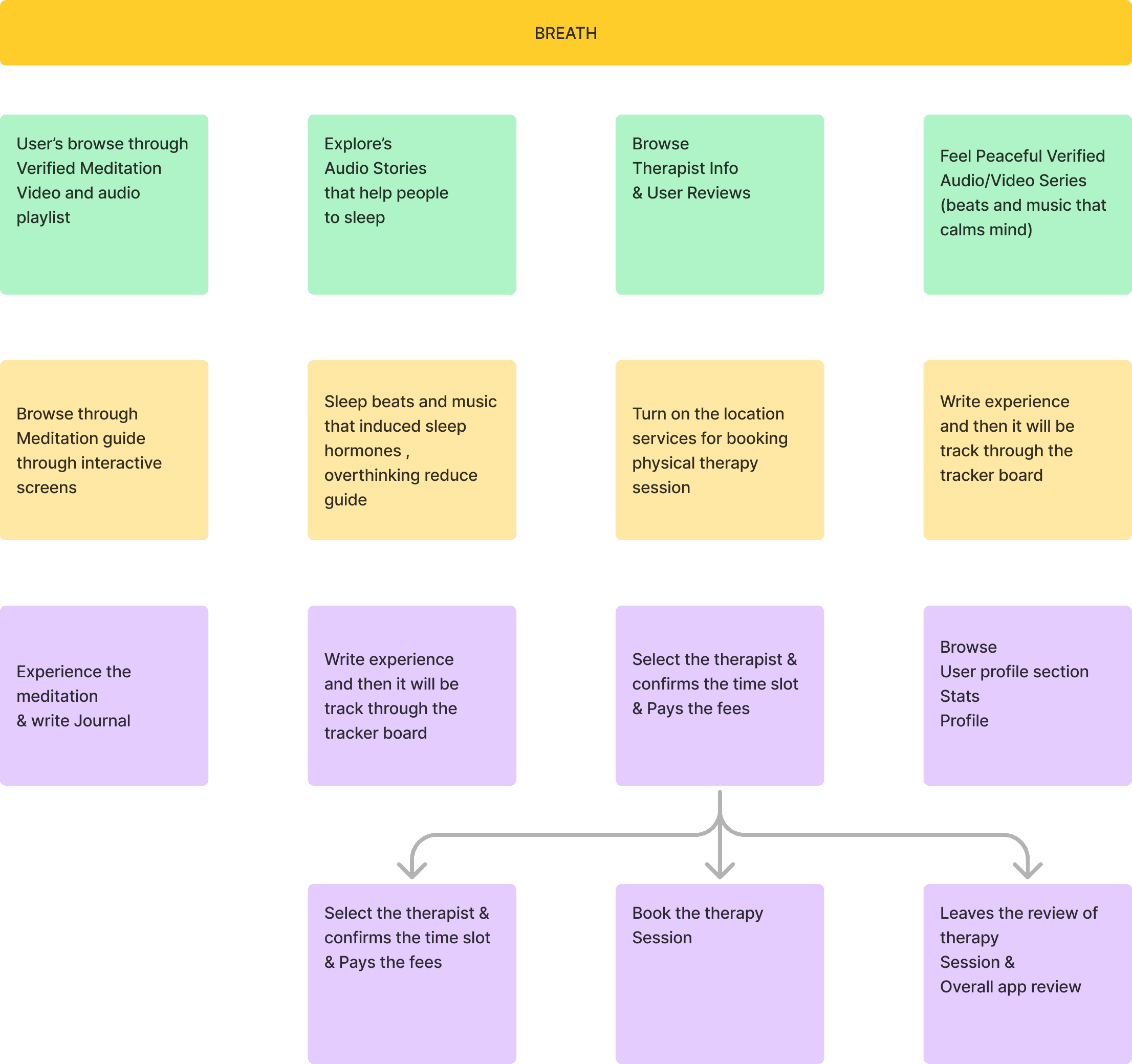
User Flow
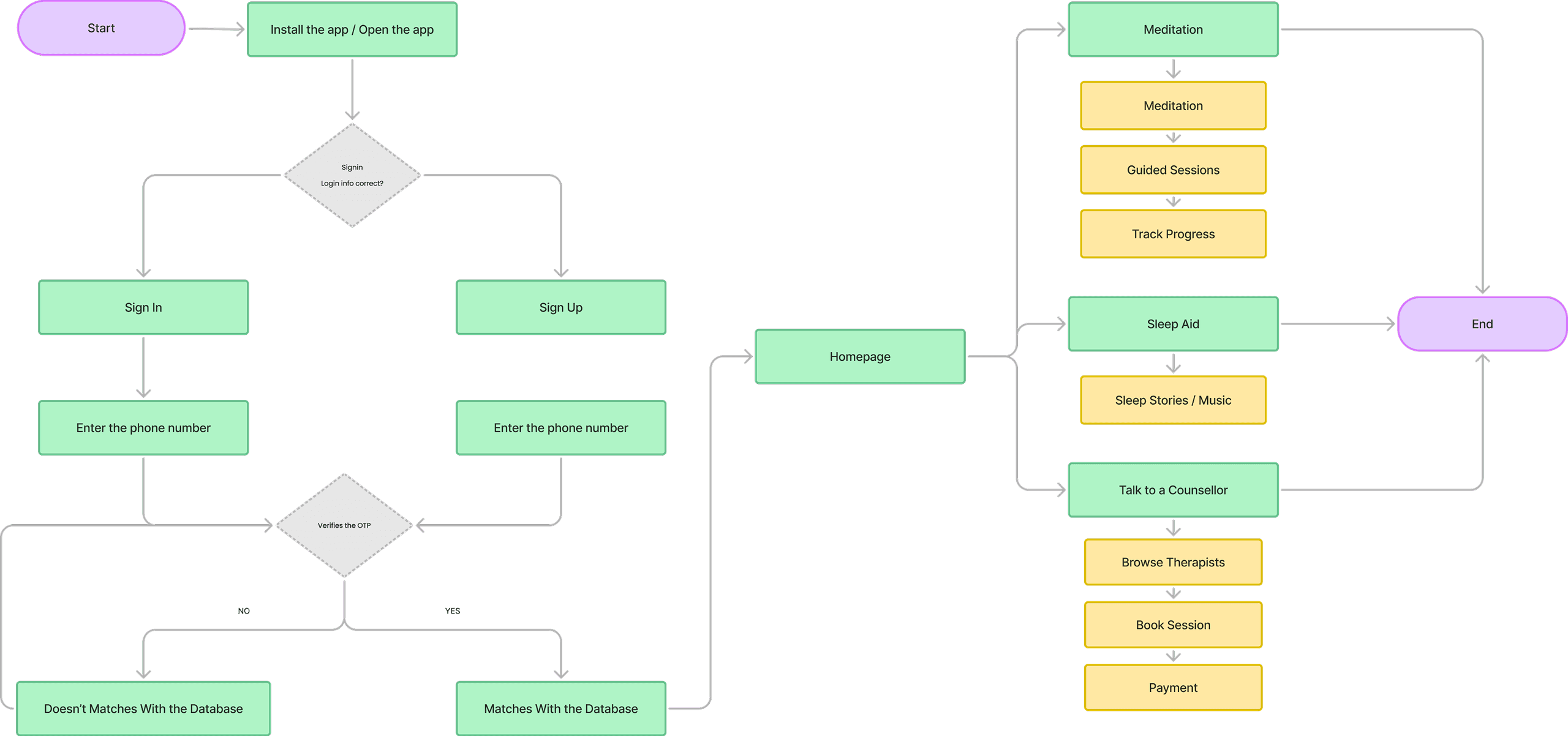
A function information architecture to understand the main actions we want them to perform using the appfunctional
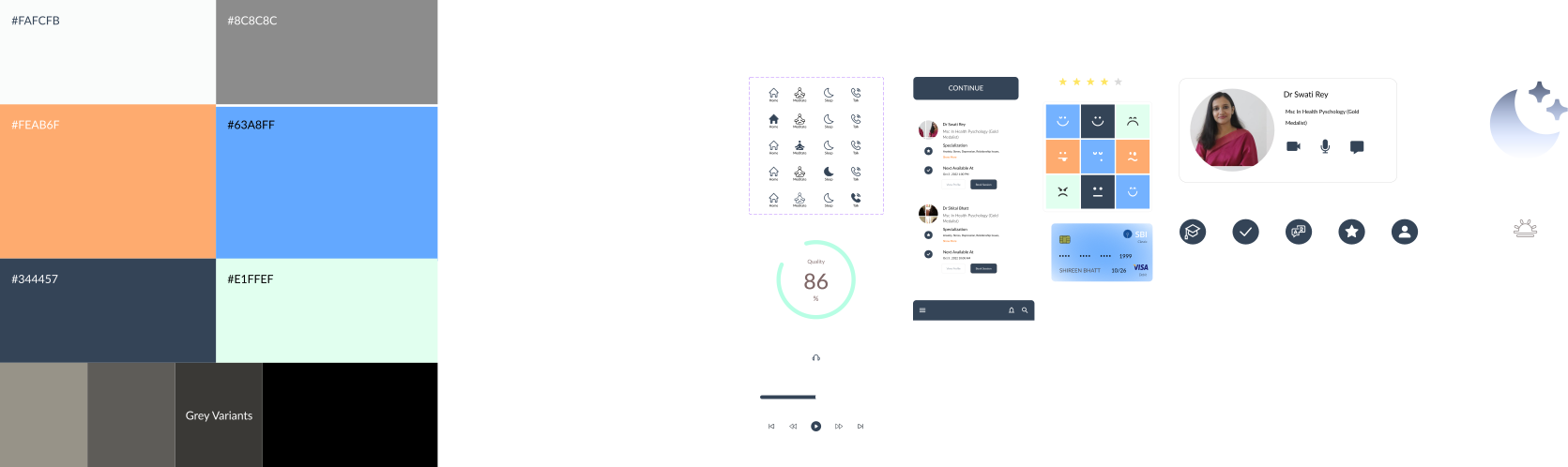
Design System
Creating the brand with an empathetic approach to mental health
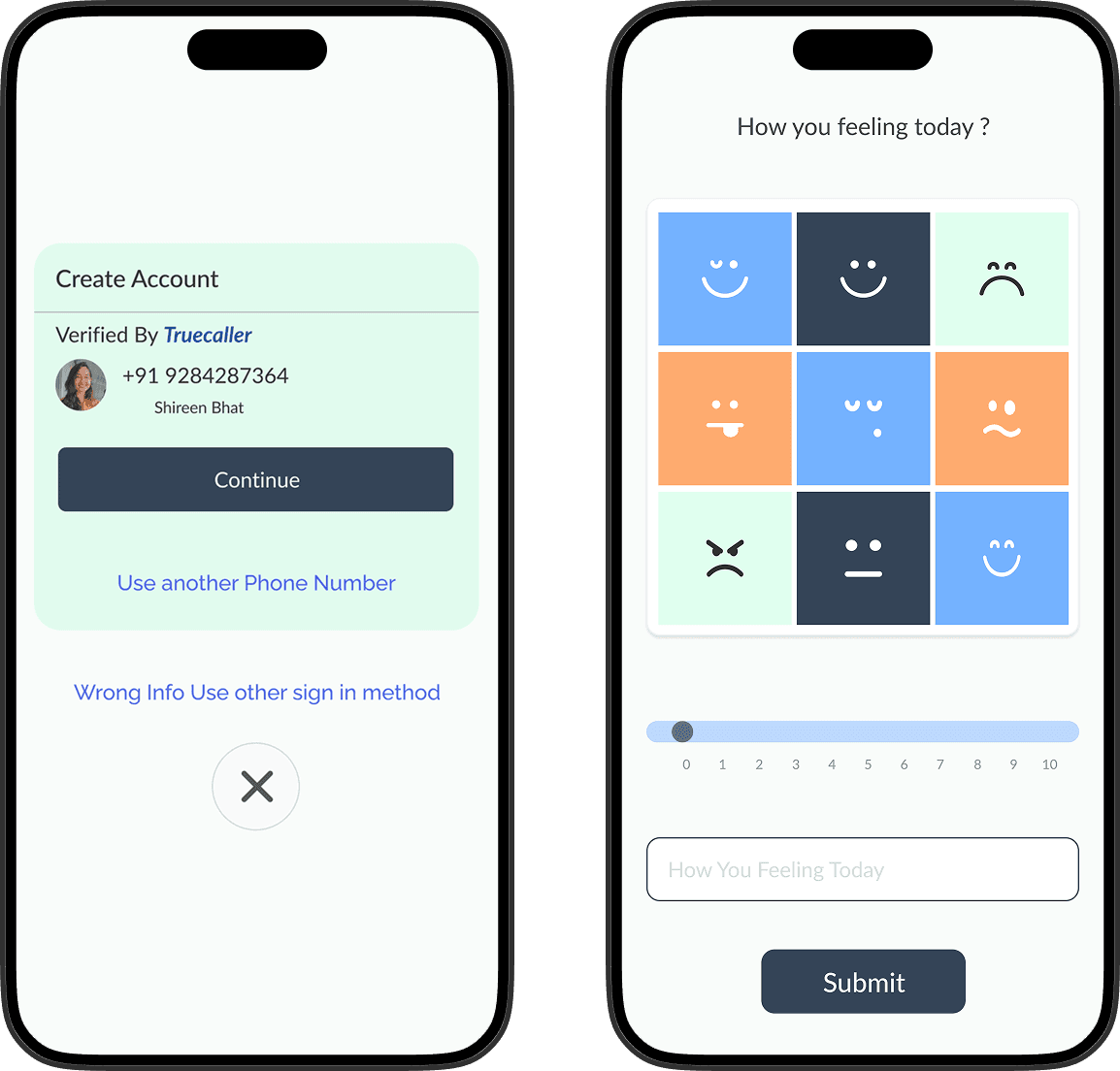
Truecaller API for Auto-Filling User Data
Minimized Cognitive Load: Reduces manual data entry by over 70%, ensuring a seamless and efficient sign-up process.
Trust-Building Through Familiarity: Incorporates a trusted API, boosting user confidence in system security and reliability.
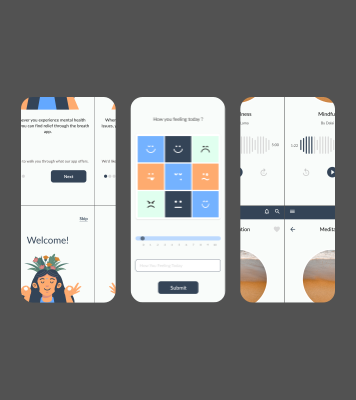
Mood Tracking with Emojis and Sliders
Intuitive Inputs: Simplifies emotional tracking, catering to 90%+ of users with easy-to-use visual tools.
Pattern Recognition: Helps users identify recurring mood trends, encouraging proactive adjustments.
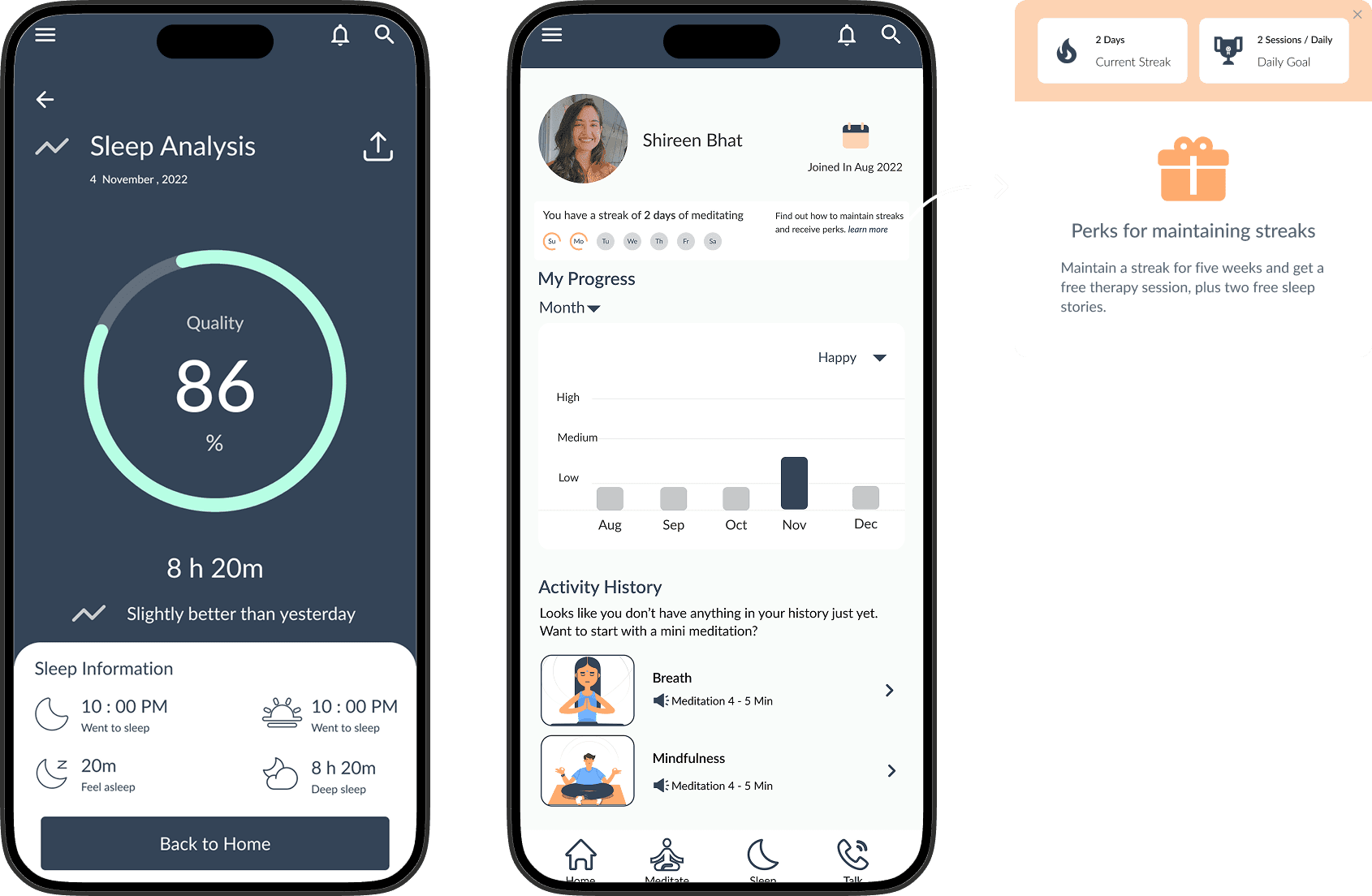
Sleep Tracking with Vibration and Analytics
Interactive Feedback: Haptic vibrations improve mindfulness during exercises, increasing engagement by 40%.
Actionable Insights: Sleep analytics, including trends and scores, drive 30% better sleep outcomes for users.
Streak Rewards for Sleep Stories
Increased Engagement: Users maintaining streaks report a 25% higher daily app usage, forming healthy habits.
Enhanced Motivation: A vibrant orange design aligns with color psychology, amplifying a sense of achievement.
Read my whole Breath A Mental Health UI/UX Case Study in detail, & You can also play with the Prototype
Learnings
Empathy matters: I learned how important it is to respect users' privacy, especially on sensitive topics like mental health.
Feedback improves designs: Iterating with feedback helped me create better solutions.
User-focused thinking: Putting myself in the users’ shoes made the design more relatable and meaningful.
Growth through practice: Each step of the process taught me something new about design and problem-solving.
Outcomes
Created a clean, simple, and user-friendly design.
Improved my design and research skills.
Gained confidence as a more thoughtful and empathetic designer.
Completing this project felt like a big step forward in my journey.
Thank you :)
You can also read my other case study on Improving Social Sharing on JioCinema: A Mini UX Case Study
You can contact me at krishnakakade77@gmail.com